Safe, Specialized Prenatal Massage
Prenatal massage is safe when performed by a trained, licensed therapist. Regular sessions can relieve lower back pain, hip tension, swollen ankles, and the sleep disruption that makes the third trimester so exhausting.
Pregnancy discomfort is real, and rest alone rarely resolves tight hips, sciatic flare-ups, or the kind of lower back tension that builds week by week. Booking a prenatal session with Patricia is qualified, professional care, good for your comfort and your wellbeing as your body does the hardest work it's ever done. Ready to see what's available? Explore our services to learn more about the full range of care at Downtown San Diego Massage.
How Each Trimester Shapes Your Session
In the first trimester, we conduct a thorough intake covering your health history, any complications, and your comfort level before touching. Pressure is gentle throughout, and positioning stays mostly face-up with bolster support.
The second trimester is when most clients notice the greatest relief from prenatal massage. As the belly grows, we begin transitioning to side-lying positioning and adjust pressure on the lower back and hip flexors, which carry the bulk of postural load at this stage. Clients commonly report reduced sciatic discomfort, eased round ligament tension, and noticeably better sleep after regular sessions.
By the third trimester, all work is performed in the side-lying position using body pillows and bolsters designed for advanced pregnancy. Patricia screens for contraindications at every session: blood pressure changes, swelling patterns, and any new symptoms since your last appointment. This is active clinical care calibrated to where you are right now, not a generic relaxation treatment.
We review contraindications at every appointment, not just the first. That includes preeclampsia risk markers, deep vein thrombosis indicators, and any changes in your obstetric care. You're encouraged to share any updates from your OB or midwife before each session.
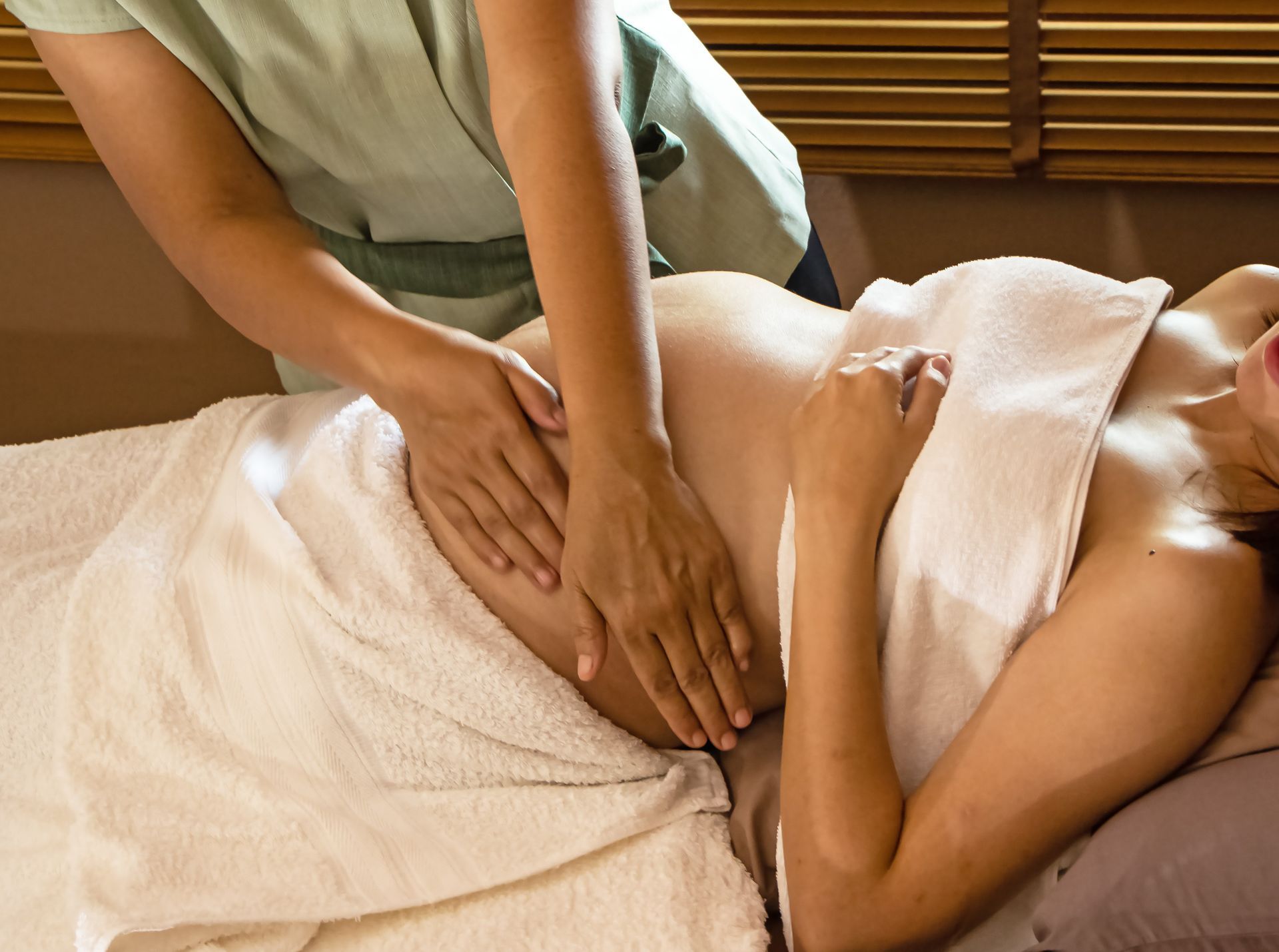
What to Expect During Your Prenatal Session
When you arrive, we start with a structured intake conversation covering your health history, current trimester, any symptoms or changes since your last visit, specific discomforts (lower back, hips, feet, shoulders), and any updates from your OB or midwife. This isn't a formality; the intake directly shapes every decision we make in the session. Clients who've had prenatal massage elsewhere consistently notice how different a thorough intake makes the work feel.
Once we understand your current state, she sets up the table with the appropriate bolsters and body pillows for safe side-lying positioning. For clients in their first or early second trimester, a modified face-up position with wedge support may work better. We explain each positioning adjustment before moving you; nothing happens without your understanding and consent.
The session focuses on the areas carrying the most load in pregnancy: lower back, sacrum, hips, glutes, and upper shoulders. We use modified Swedish techniques, long gliding strokes to improve circulation, gentle kneading to release muscular tension, and specific attention to the piriformis and psoas, where sciatic referral pain typically originates. Pressure is calibrated throughout and adjusted on request at any point.
After the session, we provide brief post-session guidance, hydration, any areas to monitor, and whether a follow-up interval makes sense given where you are in your pregnancy. You leave knowing what was worked on and why, not just that you feel better. Some prenatal clients transition to sports massage or deep tissue massage postpartum as their recovery needs shift.